
Dental Care During Pregnancy What's Safe and What to Watch | The Smile Clinic


The pregnancy brings changes into many aspects of the woman's life. Almost everyone is aware of alterations in energy level, food craving, mood and sleep. But there are less known changes in the state of her teeth and gums.

Alas, dental health is ignored by many pregnant women. Some of them think that during this period no dental procedure should be done. Others ignore the symptoms such as sore gums, sensitivity or pain in teeth since they consider them to be normal and to go away after childbirth.
But the truth is that good dental care during pregnancy in Bangalore helps to avoid any troubles, reduces the risks of some complications and improves the overall condition. Nevertheless, it's important to understand when this or that treatment can be done safely and what should be considered before doing any procedures.
If you want to know whether pregnancy dental treatment safe in Bangalore concerns are true, you will find here answers to all questions of expecting mothers.
Why Pregnancy Changes Your Oral Health? Hormonal Explanation in Simple Words
Hormones change everything in pregnancy, including the state of oral cavity.
There are two hormones whose levels increase significantly during pregnancy:
Estrogen
Progesterone
They are responsible for development of the baby, but also they impact the sensitivity of gums to plaque and bacteria. Even with the same habits of oral hygiene many women feel:
Increased sensitivity of gums
Their swelling
Inflammation in gums during brushing
Susceptibility to gum inflammation
It's one of the reasons why teeth problems during pregnancy Bangalore dentists meet are often associated with the gums rather than with the teeth.
But pregnancy impacts:
Chemical composition of saliva
Food cravings
Diet
Regularity of morning sickness
All of these factors create a special situation which demands additional attention to the oral health.
Fortunately, knowing about these changes gives you an opportunity to take care of your teeth and gums in pregnancy.
Pregnancy Gingivitis: What Is It, Why Nearly 70% of Pregnant Indian Women Have It, What to Do

One of the most widespread diseases during pregnancy is gingivitis.
Gingivitis is inflammation of the gums.
During pregnancy due to the hormone changes gums are becoming more sensitive to the plaque bacteria and thus the inflammation can occur easier than usual. Symptoms of Pregnancy Gingivitis
You may have:
Redness of gums
Swollen gums
Tender gums
Bad breath
Bleeding gums pregnancy patients often complain about while brushing or cleaning between teeth
It can be a great surprise that gums are bleeding without any evident reason even when your oral hygiene remains unchanged.
Why This Happens
Due to the increased levels of hormones the sensitivity of gums increases and the blood flow in them becomes intensified.
Thus, the gums are more prone to inflammation.
What You Should Do If You Have Pregnancy Gingivitis/ or bleeding gums
You shouldn't stop brushing your teeth if you have gingivitis. Many people make this mistake.
Instead of that:
Keep gentle brushing your teeth twice a day
Clean between the teeth
Make regular dental appointments
Contact a dentist if the bleeding persists
This way the condition can be improved in time.
Myth That All Dental Procedures Are Harmful for Pregnancy: What Is Really Safe and When?
One of the most widespread opinions among Indian families is that all dental procedures should be performed after birth.
It's not always correct.
It's crucial to know when and whether it's safe to have dental treatment during pregnancy.
The dental treatment is often safe during pregnancy when:
Correct precautions are made
Timing of treatment is taken into account
The collaboration between your doctor and dentist is established if necessary
Sometimes postponing the necessary treatment may be even more dangerous than proper one.
For example:
The infection can get worse
Painful feeling may cause increased stress levels
The gum disease may progress
So, the aim isn't to avoid dental care. The aim is to receive the correct treatment at the correct time.
Safe Trimester for Dental Care Based on Type of Procedure
Many women wonder about the safest trimester for dental treatment. It greatly depends on the kind of dental care which is needed.
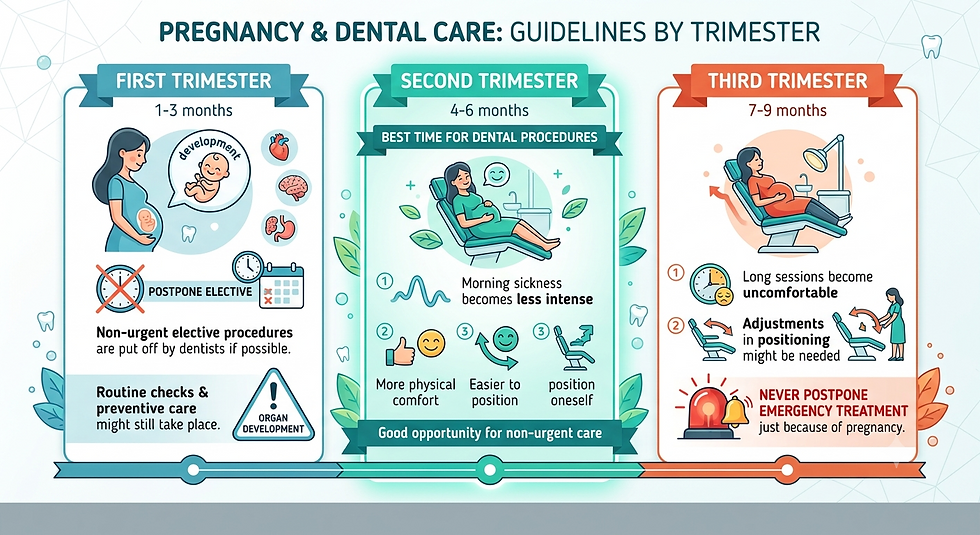
First Trimester
In the first trimester, development of the main organs occurs in the baby. Routine checks and preventive care might still take place, but usually non-urgent elective procedures are put off by dentists if possible.
Second Trimester
The second trimester is thought to be the best and most comfortable time for a lot of necessary dental procedures.
At this stage:
Morning sickness becomes less intense
There is more physical comfort
It is easier to position oneself
That is why dentists think that this trimester is a good opportunity for non-urgent care.
Third Trimester
Dental treatment can be conducted during the third trimester as well.
But at the same time:
Long sessions become uncomfortable
Adjustments in positioning might be needed
Never postpone the treatment in case of emergency just because of pregnancy.

Comments