.webp)
One of the most widespread opinions among Indian families is that all dental procedures should be performed after birth.
It's not always correct.
It's crucial to know when and whether it's safe to have dental treatment during pregnancy.
The dental treatment is often safe during pregnancy when: Correct precautions are made
Timing of treatment is taken into account
The collaboration between your doctor and dentist is established if necessary Sometimes postponing the necessary treatment may be even more dangerous than proper one.
For example:
The infection can get worse
Painful feeling may cause increased stress levels
The gum disease may progress
So, the aim isn't to avoid dental care. The aim is to receive the correct treatment at the correct time.

Dental X-Rays in Pregnant Women - Are They Safe? Another thing which causes lots of worries and raises questions is safety of dental X-rays during pregnancy. Many people believe that all X-rays must be avoided.
But actually the reality is quite different. Modern X-ray dental procedures use much less radiation than most people think. Do You Have to Refuse X-Ray in All Cases?
Not always. If an X-ray procedure is absolutely necessary for diagnosis or for emergency treatment, then your dentist might recommend it to you, protecting you appropriately.
When Might the Dentist Recommend X-Ray?
Dental X-rays are used in cases of:
Strong tooth pain
Suspected infection
Trauma
Emergency treatment planning
The general idea is that X-rays are done only when it is necessary. Tooth Decay During Pregnancy - Myth of Calcium Extraction
The most popular myth in India is:
"The baby takes calcium from the mother's teeth."
This idea has been existing for many years, but it is not how tooth decay develops.
Does Pregnancy Take Calcium From the Mother's Teeth?
No. Teeth don't give calcium to support the development of the child.
Then Why Is Tooth Decay During Pregnancy More Common?
There are several reasons why tooth decay happens more frequently during pregnancy:
More frequent snacking
Increased cravings for sweets
Changes in oral hygiene routine
Morning sickness
Contact with acids
These factors cause conditions for increasing the chances of tooth decay during pregnancy.
Calcium Deficiency – What About That?
Some women look for calcium deficiency teeth pregnancy information since they have noticed certain changes in their oral health.
Proper nutrition is essential for the health of the mother and her unborn child; however, tooth decay is mostly associated with bacteria and diet issues and not with taking calcium from teeth.
Morning Sickness – What Should You Do to Protect Tooth Enamel from Damage
Morning sickness has an impact on oral health that women may never think about. The stomach acids are very acidic. With time, frequent exposure to them can damage tooth enamel.
What Not to Do after Morning Sickness
Many women brush their teeth after vomiting because they want to feel clean; however, it increases the risk of enamel erosion.
What to Do after Morning Sickness
After vomiting:
Rinse mouth with pure water.
Do not brush your teeth for approximately half an hour.
Consider using water with baking soda added if your dentist suggests it.
Stay hydrated.
These simple steps will help you protect your enamel from acids.
Pregnancy Tumors on Gums – What Is It? Is There Anything to Be Afraid of?
The name is frightening; however, usually this condition is not dangerous.
Pregnancy tumours on gums condition means overgrowth of gum tissue that sometimes occurs in pregnant women.
This condition may be also called pregnancy tumor on gums by dentists.
What Does It Look Like?
It can look like:
Red bump.
Enlarged area of the gum.
Bleeding tissue.
Why Does It Occur?
This kind of tissue reaction occurs due to hormone level change along with irritation from plaque.
Should You Be Concerned?
In most cases, it:
Is non-cancerous.
Doesn't hurt the baby.
Will improve after pregnancy.
However, in order to diagnose it correctly and exclude other possible reasons, it is recommended to consult with a professional.
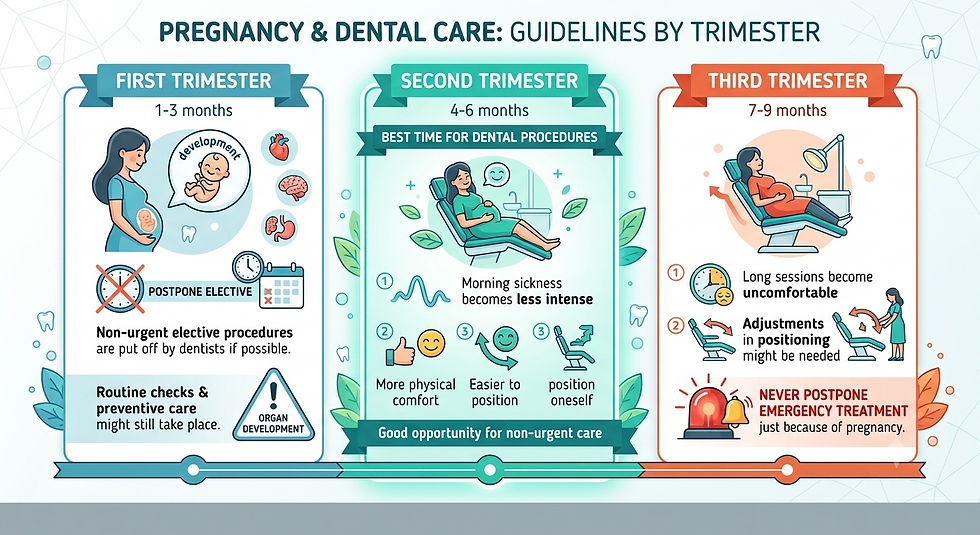
Simple Routine to Follow in Every Trimester

A simple and regular routine can make a huge difference.
Trimester 1
Focusing on:
Gentle brushing.
Overcoming nausea problems.
Hydration.
Continuation of regular dental appointments.
Trimester 2
It is a perfect time to:
Undergo recommended procedures.
Deal with gum inflammation.
Consider professional cleaning if required.
Many women ask whether dental scaling is a safe pregnancy procedure. Professional cleaning is recommended in some cases because plaque and tartar lead to gum inflammation.
Trimester 3
Following:
Daily brushing.
Interdental cleaning.
Healthy diet.
Checking gum inflammation regularly.
Small preventive measures throughout the whole pregnancy period can help you avoid big oral problems in the future.
Why Should You Never Ignore Bleeding Gums during Pregnancy
Many women think that bleeding gums is a normal symptom of pregnancy.
Although it is true, it shouldn't be ignored.
Constant inflammation of the gums can:
Cause discomfort.
Disturbing eating process.
Impair oral health after childbirth.
The good news is that most pregnancy-related gum problems can be resolved with proper professional advice and better oral hygiene.
Those patients who suffer from persistent gum inflammation can learn more about it from our special article about Bleeding Gums.
FAQ
Is dental treatment safe during pregnancy in India?
Yes, many dental treatments are considered safe during pregnancy when appropriate precautions are followed and timing is carefully planned. Preventive care, examinations, and necessary treatment can often be provided safely. The exact approach depends on the procedure, stage of pregnancy, and individual health circumstances. Your dentist and obstetric care provider can help determine the most appropriate plan.
Why do gums bleed more during pregnancy?
Hormonal changes increase blood flow and sensitivity in gum tissues, making them more reactive to plaque bacteria. As a result, many women develop pregnancy gingivitis, which causes redness, swelling, and bleeding while brushing or flossing. Bleeding gums are common during pregnancy, but they should not be ignored because proper care can significantly improve symptoms.
Which trimester is safest for dental treatment?
The second trimester is generally considered the most comfortable and practical period for many non-emergency dental procedures. Morning sickness often improves, and physical comfort is typically better than during the later stages of pregnancy. However, emergency dental treatment should be provided whenever needed, regardless of trimester, with appropriate precautions.
Is dental X-ray safe during pregnancy?
Dental X-rays are only recommended when clinically necessary. Modern dental imaging uses low radiation levels, and protective measures are used when imaging cannot be postponed. If severe pain, infection, trauma, or emergency treatment planning requires imaging, your dentist will carefully evaluate the benefits and risks before proceeding.
Can pregnancy cause tooth loss in Bangalore?
Pregnancy itself does not directly cause tooth loss. However, untreated gum disease, advanced tooth decay, or existing oral health problems can worsen during pregnancy if proper care is not maintained. Regular dental check-ups, professional cleaning when needed, and good daily oral hygiene significantly reduce the risk of serious dental complications.
Pregnant and worried about your teeth or gums? Our team at The Smile Clinic, Whitefield understands pregnancy dental care. Book a ₹400 consultation. Call or WhatsApp 7019807631.